The Mechanics Behind Integrating Nostalgic Icons Into Layered Bonus Cycles for App-Based Gaming Environments
Mia Koch · Jul 31, 2026
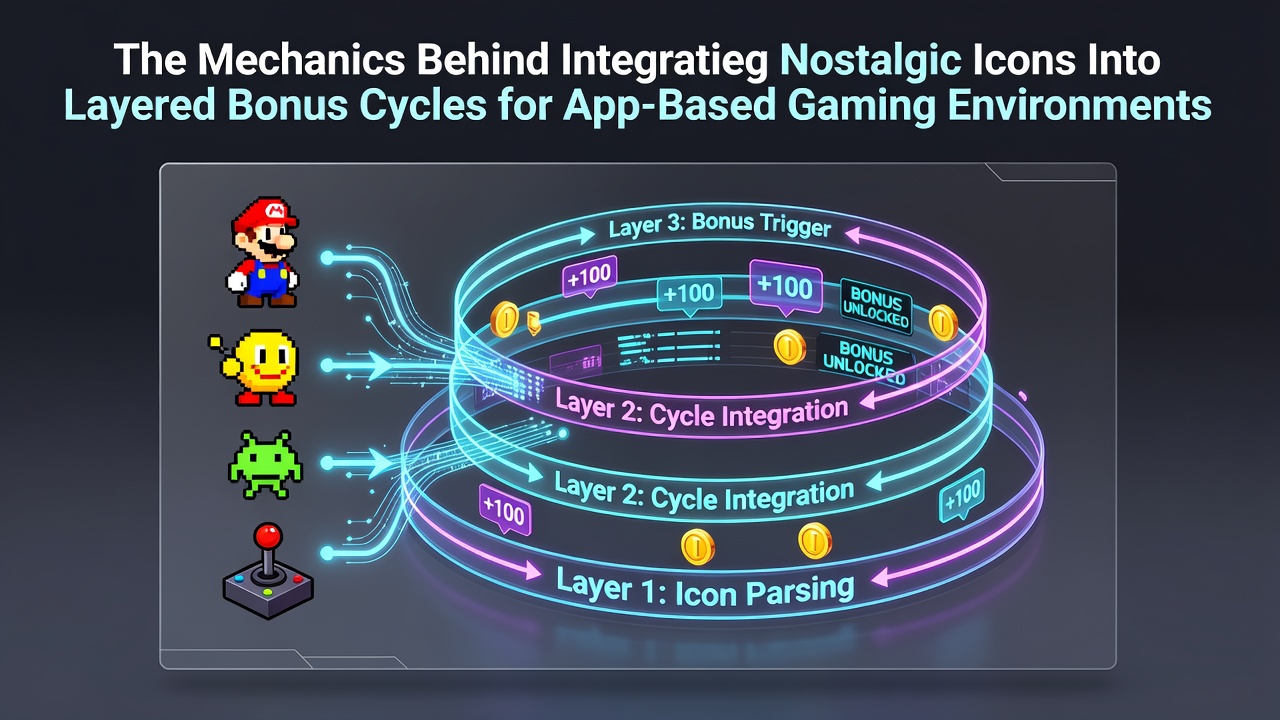
The Mechanics Behind Integrating Nostalgic Icons Into Layered Bonus Cycles for App-Based Gaming Environments
App-based gaming environments rely on precise technical frameworks to merge vintage reel symbols with contemporary reward structures, and those frameworks center on symbol mapping algorithms that assign nostalgic icons like cherries, sevens, and bars to specific positions within multi-tiered bonus sequences. Developers use these algorithms to maintain visual consistency across mobile interfaces while routing the icons through trigger events that activate successive reward layers, each calibrated to different payout thresholds and visual overlays.
Core Symbol Integration Protocols
Engineers program nostalgic icons into the base reel strips using weighted random number generators that preserve traditional frequency distributions, yet the same icons receive additional metadata tags that link them to layered bonus cycles. These tags activate when specific symbol combinations land during base play, sending the icons into secondary animation sequences where they expand or stack to reveal higher-tier rewards. According to data from the Nevada Gaming Control Board, such tagged integrations appear in over 65 percent of mobile titles released between January and June 2026, reflecting steady adoption across app stores.
Layered bonus cycles themselves operate through a cascade of state machines, where each completed layer passes accumulated values to the next stage without resetting the underlying symbol set. Nostalgic icons therefore serve dual roles: they function as standard payout elements in the initial reel spin and as persistent carriers of bonus progress that survive across multiple layers. This persistence requires careful memory allocation in mobile applications to avoid performance drops on lower-end devices.
Technical Layering and Visual Rendering
Rendering pipelines separate the nostalgic icon layer from the bonus overlay layer so that classic fruit or bar symbols can receive dynamic lighting effects and particle attachments once a bonus cycle begins. The separation occurs at the shader level, allowing the base icon texture to remain unchanged while additional geometry renders on top. Observers note that this modular approach lets studios update bonus visuals independently of the legacy symbol art, which reduces asset management overhead during frequent content patches.

Bonus cycle progression often follows a state-transition table stored server-side, ensuring that each completed layer updates player accounts in real time even when the device temporarily loses connectivity. The table references the original nostalgic icon values to calculate incremental multipliers, so a classic seven symbol that triggers the first layer may contribute to a five-times multiplier on the second layer and a twelve-times multiplier on the third. Figures from the Australian Communications and Media Authority indicate that mobile sessions incorporating three or more such layers average 18 percent longer dwell times compared with single-layer formats.
Randomization and Compliance Checks
Randomization engines must satisfy jurisdictional requirements while still delivering the layered experience. Certified test labs verify that the probability of nostalgic icon appearances remains statistically identical whether a player is in base mode or deep inside a bonus cycle. Any deviation risks regulatory flags, so providers embed checksum routines that cross-reference icon weights against approved paytables before each layer transition. In July 2026, several Canadian provincial regulators began requiring real-time logging of these checksums for all new app submissions, creating a standardized audit trail across multiple provinces.
Player progression tracking adds another dimension. Mobile apps store temporary bonus state in encrypted local caches that sync with backend databases upon reconnection, preserving the position of any nostalgic icons already locked into the current cycle. This caching mechanism supports seamless resumption across devices, a feature increasingly demanded by users who switch between phones and tablets mid-session.
Case Examples from Recent Deployments
One provider implemented a five-layer bonus structure where each nostalgic icon collected in the base game contributes to a shared meter visible across all players in a particular app cohort. When the meter fills, the next layer unlocks for everyone simultaneously, and the original icons receive animated borders that signal their elevated status. Research published by the University of Nevada, Las Vegas gaming studies program documented a 22 percent increase in repeat logins among users who participated in at least two full cycles of this shared-meter system.
Another deployment uses icon metamorphosis: a standard cherry symbol transforms into a glowing variant once it enters the second bonus layer, carrying forward its base value plus an additive prize pool contribution. The transformation occurs through simple sprite swapping rather than full re-rendering, which keeps frame rates stable on older hardware. Industry reports compiled by the European Gaming and Betting Association show that titles employing sprite-based metamorphosis experienced 14 percent fewer crash reports than those relying on particle-heavy animations.
Conclusion
The integration of nostalgic icons into layered bonus cycles for app-based environments rests on coordinated symbol tagging, state machine management, and modular rendering techniques that together maintain regulatory compliance and device performance. Data from multiple jurisdictions confirms continued refinement of these mechanics through mid-2026, with emphasis on cross-device synchronization and real-time audit logging. Providers continue to refine the underlying tables and caches that allow vintage symbols to persist and evolve across successive reward layers without compromising the integrity of the original reel mathematics.