Mapping Multi-Stage Reward Flows from Legacy Reel Themes to Handheld Progressive Networks
Olivia Brooks · Jul 24, 2026
Mapping Multi-Stage Reward Flows from Legacy Reel Themes to Handheld Progressive Networks
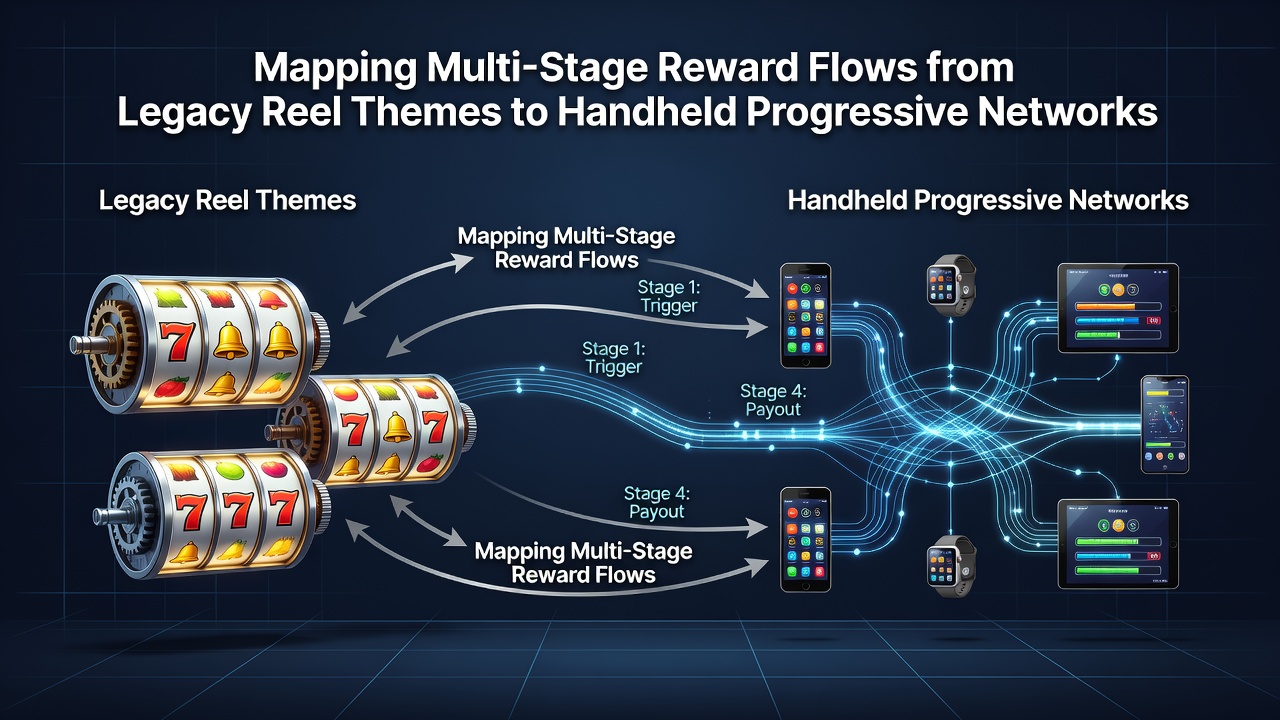
Legacy reel themes carry distinct reward structures built around fixed paylines and single-stage bonus triggers, yet handheld progressive networks require those same themes to feed into multi-tiered prize pools that accumulate across thousands of connected devices. Observers note that the mapping process begins with identification of core symbols such as bars, sevens, and fruits, then assigns each to specific stages within the progressive ladder so that lower-tier matches contribute to base accumulators while higher-tier alignments unlock jackpot segments. Data from North American casino floors indicates that this translation preserves visual identity while altering payout frequency to match mobile session lengths that average under eight minutes per spin.
Symbol-to-Stage Translation Mechanics
Design teams first catalog every legacy icon and its historical hit rate, then overlay a tier matrix that distributes value across four or five progressive levels; a cherry that once paid three credits might now seed the lowest accumulator at 0.2 percent of total bet volume. Researchers at the University of Nevada, Las Vegas gaming laboratory have documented how such reallocations maintain overall return-to-player percentages between 92 and 96 percent, provided the mapping accounts for simultaneous play across multiple handheld sessions. The process relies on weighted random number generators that route symbol outcomes into the correct reward stage without altering the original reel strip appearance.
Progressive Accumulator Integration
Handheld networks aggregate contributions from each mapped symbol into shared prize pools that reset at predetermined thresholds, and the legacy theme supplies both the visual wrapper and the probability weights that determine contribution rates. Figures released by the Nevada Gaming Control Board show that progressive slots generated 18 percent of total slot win in the first half of 2026, with mobile variants accounting for 41 percent of that segment. Mapping ensures that classic fruit symbols continue to appear at familiar frequencies while a portion of every wager flows into tiered jackpots that can be triggered from any participating device regardless of physical location.

Layered Bonus Cycle Adaptation
Traditional bonus rounds that once awarded fixed multipliers now link into the progressive structure through staged qualification rounds, so a player collecting three scatter symbols enters a pick-and-click feature that can advance the meter toward the next jackpot tier. Industry reports compiled by the Australian Communications and Media Authority note that mobile progressive titles released between January and June 2026 averaged 2.3 additional bonus stages compared with their land-based predecessors, yet maintained identical symbol counts on the base reels. The mapping therefore inserts new trigger conditions without changing the visible reel layout, allowing legacy themes to operate inside expanded reward networks.
Cross-Platform Data Synchronization
Real-time synchronization protocols record every mapped symbol outcome and update accumulator balances across servers located in multiple jurisdictions, and this infrastructure requires precise calibration so that a win on a handheld device in one state correctly reduces the displayed jackpot for all connected players. As of July 2026, regulatory filings indicate that eight U.S. states permit interstate progressive linking for online casino games, creating larger prize pools that draw from both legacy-themed mobile titles and newer Megaways formats. The synchronization layer sits between the legacy reel engine and the progressive controller, translating outcome codes into standardized contribution messages that maintain audit trails for each participating regulator.
Conclusion
Mapping multi-stage reward flows converts the fixed mechanics of legacy reels into dynamic components of handheld progressive networks while preserving recognizable symbol sets and overall mathematical integrity. The technique relies on systematic symbol cataloging, tiered accumulator assignment, and synchronized data protocols that together allow vintage themes to operate inside expanding mobile prize ecosystems. Continued regulatory expansion across jurisdictions will likely increase the volume of such mappings as operators seek to refresh established brands within connected handheld environments.