Connections Between Reel Icon Lineups and Networked Accumulator Structures in Wireless Game Formats
Kai Hayes · Jul 19, 2026
Connections Between Reel Icon Lineups and Networked Accumulator Structures in Wireless Game Formats
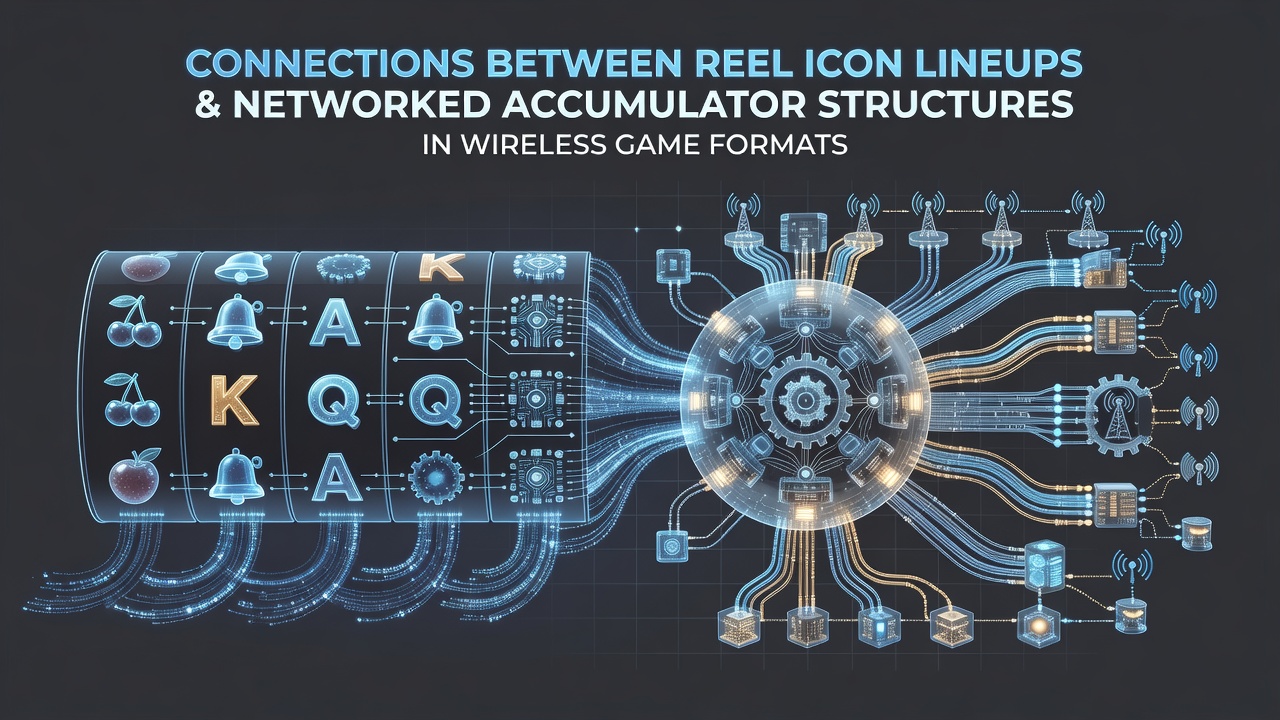
Reel icon lineups form the visual and functional core of many wireless game formats, while networked accumulator structures manage the collection and distribution of prizes across multiple sessions and players. These elements interact through specific design rules that determine how symbols align on digital reels and how those alignments feed into shared prize pools maintained on remote servers.
Reel Icon Configurations in Mobile Environments
Developers arrange reel icons in sequences that fit the constraints of handheld screens, where grid sizes often range from three to six rows and five or more columns. Classic fruit symbols, card ranks, and thematic objects appear in fixed orders on virtual reels, yet wireless versions adjust these sequences to accommodate touch controls and variable screen orientations. Data from industry tracking services shows that icon density per reel has increased steadily since 2022, with many titles now using 20 or more distinct symbols per reel strip.
Icon lineups connect directly to trigger conditions for accumulators because certain combinations activate collection mechanics that add value to a central pool. Observers note that high-frequency symbols, such as cherries or sevens, often serve as low-tier triggers that contribute small increments to accumulators, whereas rarer symbols like wilds or scatters initiate larger transfers when they land in designated patterns.
Networked Accumulator Mechanics
Accumulator structures operate across wireless networks by linking individual game instances to a shared database that records contributions from every qualifying bet. Each player action that meets predefined criteria sends a fraction of the wager to one or more tiers within the network, and the system updates displayed values in real time on mobile interfaces. Figures from regulatory filings indicate that accumulator balances in major markets grew by double-digit percentages between January and July 2026 as participation in mobile formats expanded.
Multiple accumulator tiers typically run in parallel, with separate pools for minor, major, and grand prizes. The linkage between reel icons and these tiers occurs through coded mappings that assign different symbol combinations to different contribution rates and payout thresholds. Researchers tracking game logs have documented cases where a single icon lineup change altered the average contribution rate to the grand tier by several basis points.
Integration Patterns Observed in 2026
Wireless platforms introduced in the first half of 2026 demonstrate tighter coupling between icon sequences and accumulator logic. Developers embed metadata within each symbol so that the game engine recognizes not only visual matches but also the precise accumulator impact of each match. This metadata travels with the outcome packet to the central server, where it updates the appropriate pool without requiring additional player input.

One documented pattern involves progressive icon upgrades, where repeated appearances of a base symbol gradually unlock higher-value versions that carry increased accumulator weight. Another pattern uses icon adjacency rules, so that symbols positioned next to one another on the grid multiply the contribution amount sent to the network. Reports compiled by the Nevada Gaming Control Board through June 2026 record measurable shifts in prize distribution when these adjacency rules were activated in several high-volume titles.
Technical Infrastructure Supporting the Linkage
Backend systems rely on standardized APIs that allow reel engines to communicate accumulator events to centralized servers located in licensed data centers. These APIs transmit outcome hashes rather than full graphics, which keeps bandwidth requirements low for mobile connections while preserving the integrity of icon-to-accumulator mappings. Security protocols require that every symbol-triggered contribution receives cryptographic verification before the server applies it to the pool.
Latency measurements published by network operators show that the round-trip time between a mobile device detecting an icon match and the accumulator display updating averages under 150 milliseconds in most North American and European deployments. This speed supports the perception of seamless integration even when thousands of concurrent sessions feed the same accumulator network.
Regulatory and Compliance Considerations
Jurisdictions require that accumulator algorithms remain auditable, so every icon lineup must carry documented contribution percentages that regulators can verify through test environments. The Malta Gaming Authority and the Alcohol and Gaming Commission of Ontario both mandate periodic reviews of these mappings to confirm that advertised prize growth rates match actual network behavior. Compliance documentation submitted in spring 2026 included detailed tables listing every symbol, its reel position frequency, and the exact accumulator increment it produces under each bet level.
Conclusion
Reel icon lineups and networked accumulator structures in wireless formats operate through explicit technical mappings that translate visual outcomes into contributions to shared prize pools. Industry data collected through July 2026 demonstrates consistent growth in both the complexity of icon sequences and the scale of accumulator networks, with regulatory bodies in multiple regions maintaining oversight of the linkage mechanisms. These connections continue to evolve as new mobile titles enter markets and existing systems receive incremental updates to their symbol-to-pool rules.